 447300463745
 info@belgiumvisaappointment.co.uk
 Express Visa Application
 02084326004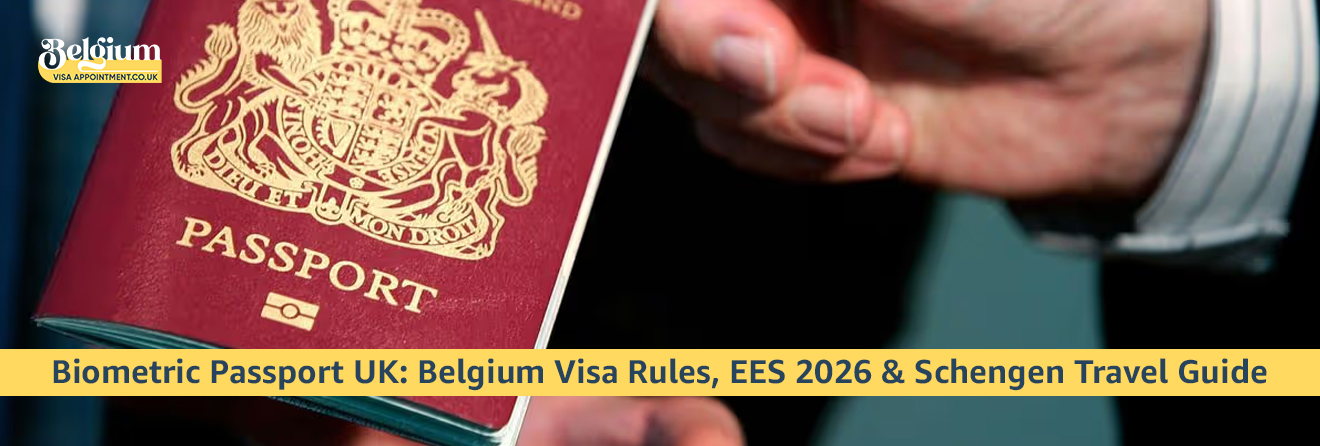
February 12, 2026
A biometric passport has become the standard travel document for international travel from the United Kingdom to Europe and beyond. UK residents and non-EU nationals living in the UK need to understand what a biometric passport is, how it works, and why it matters, especially if they are applying for Schengen visas, e.g., a Belgium visa.
As the European Union is implementing new biometric border systems and the UK is heading towards a fully digital immigration status, biometric passports have become critical for hassle-free travel, quicker border checks, and secure identity confirmation. This detailed guide will tell you all about what a biometric passport is, how to know if your passport is biometric, what happens when you don’t have a biometric passport, and why it matters when applying for a Belgium visa from UK.
| Feature | Latest Status (2025–2026) |
| Global standard | ICAO-compliant biometric passports required worldwide |
| UK passport type | All UK passports issued are biometric (ePassports) |
| EU Entry/Exit System (EES) | Live since Oct 2025 for non-EU travellers |
| Biometrics used | Facial image + fingerprints (at EU borders) |
| UK passport issuance | ~7 million passports issued per year (HMPO) |
| Digital border systems | UK eVisas & EU biometric registration expanding |
| Required for Schengen visas | Yes (including Belgium visa) |
A biometric passport, also known as an electronic passport, has an electronic chip that contains the holder’s personal and biometric data. These details can be accessed to verify the identity of the passport holder. Use of biometric data such as fingerprints and facial recognition allows for faster processes and better identification of travelers.
Typically, the chip holds the following information:
While some countries also store fingerprints, the UK passport stores facial biometrics only on the chip. Fingerprints are taken at EU borders for entry and exit from the border.
The biometric passport is designed to:
Frequent travelers always think and wonder, “How do I know if my passport is biometric or not? Well, don’t worry, as it is an easy step to know if your travel document is the biometric passport or if you should apply for a biometric passport to experience the benefits of it. You can easily identify a biometric passport by this symbol:
A small gold camera symbol on the front cover. If your passport has this symbol, it is a biometric passport.
Note: All UK passports issued in recent years are biometric by default.
In order to know if your passport is biometric or not, look at the cover. It looks like a regular passport, but the biometric passport has a special gold camera/rectangle symbol on the front cover. It shows an embedded microchip that stores your digital photo and personal data for advanced security. This increased security makes it harder to forge and easy to verify at borders.
There are two major indicators that prove the authenticity of a biometric passport from a regular passport. Here’s how to verify:
The first thing you can look for is the international biometric symbol or an embedded logo (a rectangle with a circle in the middle) on the front cover. It is usually gold in color, through which it can be verified at the border check without any hassle.
In a biometric passport, a chip and antenna are embedded in the cover or data page, which cannot be felt. The chip in the passport contains a person’s digital face image and personal details.
More to read: Belgium Visa Validity: What You Need to Know and What to Do if You Overstay
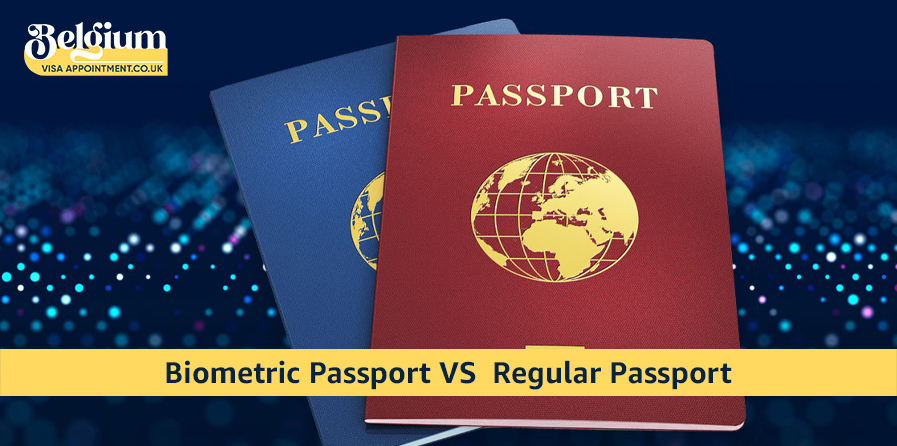
Biometric passports and regular passports might be identical in appearance, but essentially they use different technologies for security purposes. A biometric passport is integrated with an electronic chip that holds the personal and biometric information of the passport owner, thus making it more secure and difficult to alter than the conventional passport. This extra level of security not only guards against identity fraud but also facilitates faster border control procedures.
Let’s check the difference between the biometric passport and a regular one.
| Feature | Biometric Passport | Regular Passport |
| Electronic chip | Yes | No |
| Facial biometrics | Yes | No |
| Fingerprint support | Border systems | No |
| Fraud protection | High | Low |
| eGate use | Yes | No |
| EU EES compatibility | Yes | No |
Remember that biometric passports are harder to forge and are easy for travel, whereas regular passports lack this chip and have less enhanced security with high chances of data breach and authentication.
In the UK, a biometric passport acts the same as biographical data printed on the contactless chip that stores the holder’s personal and biographical data for identity verification, which includes a digital photograph, fingerprints, and iris scans sometimes.
This data is protected by a digital signature and sometimes includes facial recognition mapping. Below is the listed major biometric data stored on the chip embedded on the biometric passport.
This includes a high-resolution digital 3D-mapped photograph for facial recognition.
These consist of digital images of fingerprints and is required by some countries and not by all.
This contains name, date of birth, nationality, and passport number, matching the printed data page.
It is used to verify the authenticity of the data and to make sure that the data has not been altered.
The chip consists of a special number that is integrated into the chip itself. It is a distinct number that is readable by machines and is often an embedded identifier that links the physical booklet to the digital information stored inside.
More to read: Cover Letter for Belgium Tourist Visa From the UK
Biometric passports are equipped with computer chips (usually incorporated in the passport cover or back cover) that store your personal information and a digitized facial image. These chips can be accessed by electronic scanners at border crossings, which is generally a lot quicker than a manual read by an immigration officer.
In the UK, if your chip fails, the UK Border Force guidance states that if the e-gate cannot read the microchip, you will be directed to an officer for manual checks. You may still be allowed entry if other checks are successful; however, some foreign authorities or automated systems outside the UK may require a working chip. Therefore, it is advisable to replace a defective chip on the biometric passport before travelling.
In October 2025, the European Union launched the Entry/Exit System (EES). This system requires all non-EU travellers, including UK residents and visa holders, to register biometric data at EU borders.
Under EES:
Note: This applies to travelers visiting Belgium and other Schengen countries.
For holders and applicants, having a valid Belgian biometric passport is now a prerequisite for:
The UK is also updating its immigration and border control systems for ease of travel with the introduction of the EES system. With an aim on enhancing border security and decreasing identity fraud, here are some recent facts about biometric passports in general to stay updated.
Key UK Updates:
According to the UK Home Office:
Major Update on Non-EU Nationals Passports for Biometric Passports:
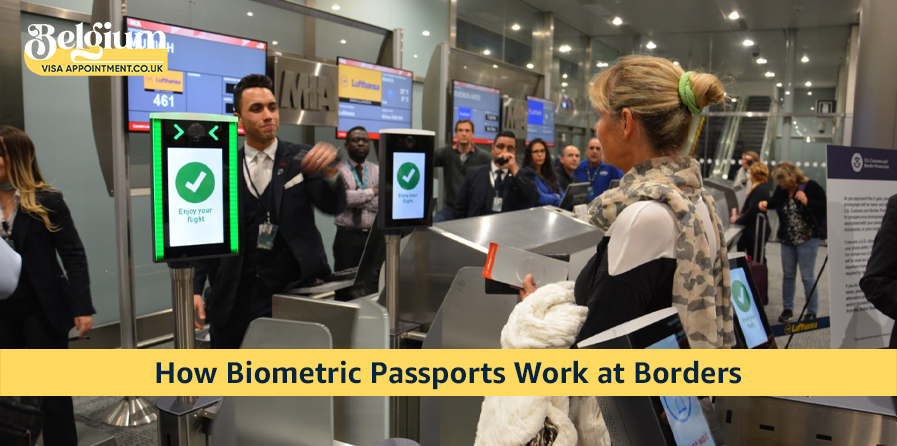
If you travel with your Belgian biometric passport or any Schengen country:
How does it help? This reduces:
When they are used:
Biometric passports are common for international travel and are often required to automate fast lanes in airports and at land borders.
| Statistic | Latest Figure |
| UK passports issued yearly | ~7 million |
| UK visa holders using eVisas | 4+ million |
| EU biometric border system start | Oct 2025 |
| Non-EU travellers affected | 100% entering Schengen |
| Countries using biometric passports | 180+ globally |
Belgium follows Schengen and EU biometric border rules. This entails:
For visa holders, biometric passports:
If you do not have a Belgian biometric passport:
Most older non-biometric passports are being phased out globally.
More to read: 10 Common Belgium Visa Mistakes by UK Travellers — How to Avoid Rejection!
If you are applying for a Belgium visa from UK for Indian passport:
These improvements result in greater overall visa system reliability and border security. Therefore, if you are planning on going to Belgium with your newly updated biometric passports, make sure to get your Belgium visa appointment from UK at least 2 months before your travel dates.
Biometric passports, or e-passports, provide great security and convenience benefits but also come with some concerns about privacy and higher costs. Below is the list of advantages and disadvantages mentioned:
The biometric data, such as digital image of the face and fingerprints, is difficult to forge or replicate, which reduces the chances of identity theft and fraud
At border crossings our biometrics are equipped with automated ePassport gates at many international borders. The systems quickly check the passport chip to verify the identity of the holder using facial recognition technology.
Travelers do not need to remember passwords or carry extra documentation. The verification process is quick and seamless with the help of an encrypted electronic chip.
Automated biometric verification is less prone to human error than manual checks by border agents.
The storage and use of sensitive biometric data raise privacy questions. There are concerns about how this information is stored, who has access to it, and the potential for misuse.
While highly secure, no system is entirely foolproof. If a data breach were to occur, compromised biometric data is irreplaceable, unlike a password.
Poor lighting, physical changes (such as a big change in weight, injuries leaving a fingerprint), or a blockage can cause a legitimate user to get rejected by the system (a false negative).
Relying heavily on technology means there is always a chance of system breakdowns, glitches, or scanner shortages at border crossings, which are likely to hamper the journey.
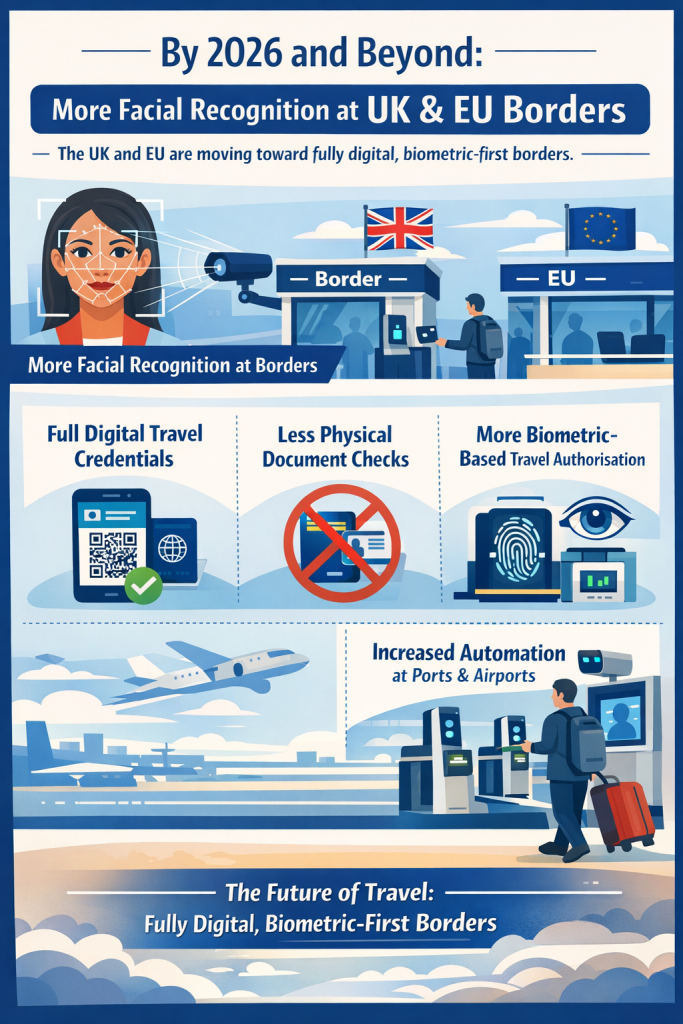
The UK and the EU are progressing towards fully digital, biometric first borders by and after 2026. This includes increased facial recognition, digital travel credentials, fewer physical document checks, biometric-based travel authorization, and greater automation at airports and ports, making international travel faster, more secure, and more efficient for travelers.
More to read: Belgium in April 2026: Explore Belgium With This Mini Travel Guide
A biometric passport is now a basic requirement for international travel, especially for UK residents and non-EU nationals visiting Belgium and other Schengen countries. Biometric passports have become an essential part of modern traveling as the EU rolls out its new biometric border systems and the UK transitions to digital immigration.
These passports have an electronic chip embedded, which stores your personal and biometric data, for instance, your facial picture. As such, immigration officers can cross, check your ID swiftly and accurately. As a result, travelers benefit from faster border processing, reduced waiting times, and fewer manual checks.
Besides preventing identity fraud and the unauthorized use of passports, biometric passports also provide higher security. Linking your travel history digitally to your identity helps ensure better visa compliance. This reduces mistakes, prevents overstays, and increases the efficiency of the whole border control system.
If you are going to travel from the UK to Belgium or Europe, it is no longer a matter of choice whether you should have a biometric passport or not; it is a necessity for a smooth, safe, and law-abiding journey.

July 13, 2026


June 24, 2026

June 23, 2026


 Your information is safe with us and will not be shared with third parties.